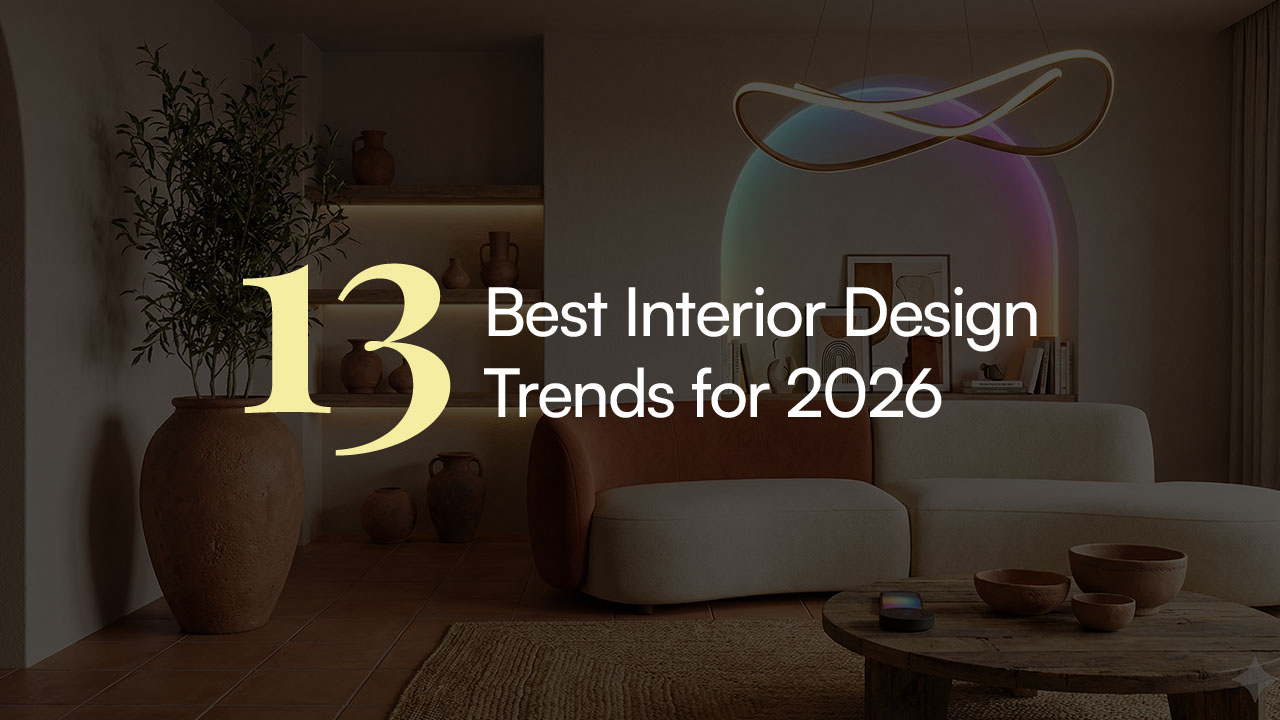
Interior design in 2026 is not about looking rich. It’s about looking intentional. Trends are shifting. Fast. Homes are getting quieter. Smarter. More personal. People are done with copy-paste Pinterest rooms. They want spaces that feel lived in, not staged.

Design in 2026 cares less about perfection. More about mood. Texture. And how a room actually works at 9 pm. Materials are getting honest. Colors are getting bolder but are used with control. Luxury is subtle now. Almost shy. This year’s trends are not loud statements. They are quiet decisions that add up. Some trends will age well. Some will look outdated by next winter. Let’s break down what really matters in interior design for 2026. And what you should actually follow, not just save.


Trend #1: Soft, Flowing Wooden Forms

Sharp edges are fading out. Nature is taking control again. Wood in 2026 is not rigid or boxy. It bends. Curves. Moves visually. Think rounded tables. Wavy cabinet fronts. Chairs that look carved, not manufactured.

Grains are visible. Imperfect. No heavy polish. No fake finishes. These wooden silhouettes make spaces feel calmer. More human. Less engineered. This trend works because it’s timeless. Organic shapes don’t age fast.

Trend #2: Freehand, Imperfect Art

Perfect lines are boring now. Too controlled. Too fake. The 2026 design is embracing the hand. Brush strokes that show effort. Patterns that don’t repeat cleanly. Wall art looks sketched, not printed. Murals feel personal, not branded.

This is about character. About letting spaces feel unfinished in a good way. If everything in your room looks flawless, it probably has no soul.

Trend #3: Zoned Living, Not Open Plans

Open layouts looked good on paper. Lived badly in real life. In 2026, spaces are being divided again. Not with walls. With intention. Rugs define areas. Lighting separates moods. Furniture creates boundaries.

Work stays in one zone. The rest stays in another. This trend exists because people got tired. Tired of doing everything in one messy space. Good design now respects mental boundaries.

Trend #4: Wooden Embroidery Details

Flat wood surfaces are getting boring. So designers are carving again. In 2026, wood is treated like fabric. Detailed. Layered. Decorative.

Fine grooves on panels. Hand-carved cabinet fronts. Laser-cut patterns with depth. It’s subtle, not heavy. More craft, less mass production.

This trend adds richness without clutter. You feel it before you notice it. If used too much, it looks busy. One feature is enough.

Trend #5: Fat, Oversized Furniture

Skinny furniture is out. It looks weak. Feels uncomfortable. 2026 furniture is thick. Low. Wide. Grounded. Sofas you sink into. Tables with solid legs. Chairs that don’t look fragile.

This trend is about comfort first. Visual weight equals physical comfort. Rooms feel stable, not airy. Secure, not staged. If your furniture looks like it might break, it doesn’t belong in 2026 interiors.

Trend #6: Matte Everything

Glossy finishes are trying too hard. They reflect light. And mistakes. In 2026, surfaces go matte. Walls. Cabinets. Metals. Matte feels calm. More premium. Less noisy. Fingerprints are less visible. Lighting looks softer.

This trend works because it’s practical. And because shine ages badly. If something is glossy just to look expensive, it won’t last. 

Trend #7: Sustainable Luxury 

Sustainability is not a label anymore. It’s a requirement. 2026 luxury doesn’t waste. It chooses better. Reclaimed wood. Low-impact stones. Locally made pieces.

No fake eco-claims. No greenwashing nonsense. This trend is about long-term value. Stuff that lasts, not stuff that trends. If a design is “luxury” but disposable, it failed the brief.

Trend #8: Mood-Based Lighting Design

One ceiling light is a lazy design. And it kills the mood. In 2026, lighting is layered. Task. Ambient. Accent. Warm tones dominate. Shadows are intentional.

Lights highlight texture, not just space. Corners matter now. This trend changes how a room feels instantly. Same room. Different mood. If lighting is an afterthought, the whole interior suffers.

Trend #9: Personal, Not Trend-Led Spaces

Blindly following trends is weak design. 2026 calls that out. Homes are getting personal again. Collected, not copied. Old pieces mixed with new ones. Travel finds. Custom objects.

Design reflects the person, not Instagram. No two homes should look the same. This trend is the hardest to do right. Because it requires taste. If your space could belong to anyone, it belongs to no one.

Trend #9: Maximalist Mirrors

Mirrors are no longer just functional. They are statements now. In 2026, mirrors go big. Odd shapes. Heavy frames. Layered placements. Think vintage frames. Oversized arches. Clustered mirror walls. They add depth without clutter. Light without extra decor.

This trend works when it’s confident. One strong mirror beats five small ones. Overdo it and it looks chaotic. Control is everything.

Interior Design Color Trends 2026

Trend #10: Bold Monochrome Interiors

One color. No backup. That’s the rule. 2026 monochrome isn’t safe or soft. It’s deep. Saturated. Confident. Walls, furniture, and even ceilings align. Different shades. Same family.

Texture stops it from looking flat. Lighting stops it from feeling heavy. This trend is risky. But when it works, it dominates the space. If you’re scared of commitment, don’t try this one.

Trend #11: Creme-Level Neutrals

White is getting tired. Grey has already lost. 2026 neutrals are creamy. Soft. Warm. Slightly tinted. Think butter beige. Oat milk tones. Warm off-whites. These shades make spaces feel calm, not cold. Expensive, without trying hard. They work best with texture. Flat paint alone won’t save them. If your neutral looks sterile, it’s the wrong neutral.

Trend #12: Electric Saturation

Muted isn’t the only answer anymore. 2026 allows chaos, controlled chaos. Electric colors are back. Cobalt. Acid green. Burnt orange. Used in hits, not floods. One wall. One sofa. One art piece. Everything else stays calm. That’s the balance. This trend is about confidence. Not noise. If everything is electric, nothing stands out.

Trend #13: Clay and Terracotta Revival

Cold materials are losing ground. Earth is coming back. Clay and terracotta feel real. Textured. Imperfect. Warm. Used in tiles. Planters. Feature walls. These tones ground a space instantly. No styling needed. This trend works because it connects indoors to outdoors. If a space feels disconnected or fake, add earth.

Conclusion 

Interior design in 2026 is not chasing trends. It’s filtering them. What survives is thoughtful. What fails is loud and lazy. The best interiors feel calm, lived-in, and intentional. They age well. They work hard. Trends are tools, not rules. Use what fits your life. Drop the rest.

That’s why good design now depends less on inspiration and more on execution. This shift is already visible in how top interior designers in Bangalore work. Less show. More substance.

The smartest interior designers in Bangalore are designing for longevity, not Instagram saves. 2026 rewards taste, not hype. And bad design doesn’t get a second chance anymore.

Interior design in 2026 is not about looking rich. It’s about looking intentional. Trends are shifting. Fast. Homes are getting quieter. Smarter. More personal. People are done with copy-paste Pinterest rooms. They want spaces that feel lived in, not staged.

Design in 2026 cares less about perfection. More about mood. Texture. And how a room actually works at 9 pm. Materials are getting honest. Colors are getting bolder but are used with control. Luxury is subtle now. Almost shy. This year’s trends are not loud statements. They are quiet decisions that add up. Some trends will age well. Some will look outdated by next winter. Let’s break down what really matters in interior design for 2026. And what you should actually follow, not just save.


Trend #1: Soft, Flowing Wooden Forms

Sharp edges are fading out. Nature is taking control again. Wood in 2026 is not rigid or boxy. It bends. Curves. Moves visually. Think rounded tables. Wavy cabinet fronts. Chairs that look carved, not manufactured.

Grains are visible. Imperfect. No heavy polish. No fake finishes. These wooden silhouettes make spaces feel calmer. More human. Less engineered. This trend works because it’s timeless. Organic shapes don’t age fast.

Trend #2: Freehand, Imperfect Art

Perfect lines are boring now. Too controlled. Too fake. The 2026 design is embracing the hand. Brush strokes that show effort. Patterns that don’t repeat cleanly. Wall art looks sketched, not printed. Murals feel personal, not branded.

This is about character. About letting spaces feel unfinished in a good way. If everything in your room looks flawless, it probably has no soul.

Trend #3: Zoned Living, Not Open Plans

Open layouts looked good on paper. Lived badly in real life. In 2026, spaces are being divided again. Not with walls. With intention. Rugs define areas. Lighting separates moods. Furniture creates boundaries.

Work stays in one zone. The rest stays in another. This trend exists because people got tired. Tired of doing everything in one messy space. Good design now respects mental boundaries.

Trend #4: Wooden Embroidery Details

Flat wood surfaces are getting boring. So designers are carving again. In 2026, wood is treated like fabric. Detailed. Layered. Decorative.

Fine grooves on panels. Hand-carved cabinet fronts. Laser-cut patterns with depth. It’s subtle, not heavy. More craft, less mass production.

This trend adds richness without clutter. You feel it before you notice it. If used too much, it looks busy. One feature is enough.

Trend #5: Fat, Oversized Furniture

Skinny furniture is out. It looks weak. Feels uncomfortable. 2026 furniture is thick. Low. Wide. Grounded. Sofas you sink into. Tables with solid legs. Chairs that don’t look fragile.

This trend is about comfort first. Visual weight equals physical comfort. Rooms feel stable, not airy. Secure, not staged. If your furniture looks like it might break, it doesn’t belong in 2026 interiors.

Trend #6: Matte Everything

Glossy finishes are trying too hard. They reflect light. And mistakes. In 2026, surfaces go matte. Walls. Cabinets. Metals. Matte feels calm. More premium. Less noisy. Fingerprints are less visible. Lighting looks softer.

This trend works because it’s practical. And because shine ages badly. If something is glossy just to look expensive, it won’t last. 

Trend #7: Sustainable Luxury 

Sustainability is not a label anymore. It’s a requirement. 2026 luxury doesn’t waste. It chooses better. Reclaimed wood. Low-impact stones. Locally made pieces.

No fake eco-claims. No greenwashing nonsense. This trend is about long-term value. Stuff that lasts, not stuff that trends. If a design is “luxury” but disposable, it failed the brief.

Trend #8: Mood-Based Lighting Design

One ceiling light is a lazy design. And it kills the mood. In 2026, lighting is layered. Task. Ambient. Accent. Warm tones dominate. Shadows are intentional.

Lights highlight texture, not just space. Corners matter now. This trend changes how a room feels instantly. Same room. Different mood. If lighting is an afterthought, the whole interior suffers.

Trend #9: Personal, Not Trend-Led Spaces

Blindly following trends is weak design. 2026 calls that out. Homes are getting personal again. Collected, not copied. Old pieces mixed with new ones. Travel finds. Custom objects.

Design reflects the person, not Instagram. No two homes should look the same. This trend is the hardest to do right. Because it requires taste. If your space could belong to anyone, it belongs to no one.

Trend #9: Maximalist Mirrors

Mirrors are no longer just functional. They are statements now. In 2026, mirrors go big. Odd shapes. Heavy frames. Layered placements. Think vintage frames. Oversized arches. Clustered mirror walls. They add depth without clutter. Light without extra decor.

This trend works when it’s confident. One strong mirror beats five small ones. Overdo it and it looks chaotic. Control is everything.

Interior Design Color Trends 2026

Trend #10: Bold Monochrome Interiors

One color. No backup. That’s the rule. 2026 monochrome isn’t safe or soft. It’s deep. Saturated. Confident. Walls, furniture, and even ceilings align. Different shades. Same family.

Texture stops it from looking flat. Lighting stops it from feeling heavy. This trend is risky. But when it works, it dominates the space. If you’re scared of commitment, don’t try this one.

Trend #11: Creme-Level Neutrals

White is getting tired. Grey has already lost. 2026 neutrals are creamy. Soft. Warm. Slightly tinted. Think butter beige. Oat milk tones. Warm off-whites. These shades make spaces feel calm, not cold. Expensive, without trying hard. They work best with texture. Flat paint alone won’t save them. If your neutral looks sterile, it’s the wrong neutral.

Trend #12: Electric Saturation

Muted isn’t the only answer anymore. 2026 allows chaos, controlled chaos. Electric colors are back. Cobalt. Acid green. Burnt orange. Used in hits, not floods. One wall. One sofa. One art piece. Everything else stays calm. That’s the balance. This trend is about confidence. Not noise. If everything is electric, nothing stands out.

Trend #13: Clay and Terracotta Revival

Cold materials are losing ground. Earth is coming back. Clay and terracotta feel real. Textured. Imperfect. Warm. Used in tiles. Planters. Feature walls. These tones ground a space instantly. No styling needed. This trend works because it connects indoors to outdoors. If a space feels disconnected or fake, add earth.

Conclusion 

Interior design in 2026 is not chasing trends. It’s filtering them. What survives is thoughtful. What fails is loud and lazy. The best interiors feel calm, lived-in, and intentional. They age well. They work hard. Trends are tools, not rules. Use what fits your life. Drop the rest.

That’s why good design now depends less on inspiration and more on execution. This shift is already visible in how top interior designers in Bangalore work. Less show. More substance.

The smartest interior designers in Bangalore are designing for longevity, not Instagram saves. 2026 rewards taste, not hype. And bad design doesn’t get a second chance anymore.

Interior design in 2026 is not about looking rich. It’s about looking intentional. Trends are shifting. Fast. Homes are getting quieter. Smarter. More personal. People are done with copy-paste Pinterest rooms. They want spaces that feel lived in, not staged.

Design in 2026 cares less about perfection. More about mood. Texture. And how a room actually works at 9 pm. Materials are getting honest. Colors are getting bolder but are used with control. Luxury is subtle now. Almost shy. This year’s trends are not loud statements. They are quiet decisions that add up. Some trends will age well. Some will look outdated by next winter. Let’s break down what really matters in interior design for 2026. And what you should actually follow, not just save.


Trend #1: Soft, Flowing Wooden Forms

Sharp edges are fading out. Nature is taking control again. Wood in 2026 is not rigid or boxy. It bends. Curves. Moves visually. Think rounded tables. Wavy cabinet fronts. Chairs that look carved, not manufactured.

Grains are visible. Imperfect. No heavy polish. No fake finishes. These wooden silhouettes make spaces feel calmer. More human. Less engineered. This trend works because it’s timeless. Organic shapes don’t age fast.

Trend #2: Freehand, Imperfect Art

Perfect lines are boring now. Too controlled. Too fake. The 2026 design is embracing the hand. Brush strokes that show effort. Patterns that don’t repeat cleanly. Wall art looks sketched, not printed. Murals feel personal, not branded.

This is about character. About letting spaces feel unfinished in a good way. If everything in your room looks flawless, it probably has no soul.

Trend #3: Zoned Living, Not Open Plans

Open layouts looked good on paper. Lived badly in real life. In 2026, spaces are being divided again. Not with walls. With intention. Rugs define areas. Lighting separates moods. Furniture creates boundaries.

Work stays in one zone. The rest stays in another. This trend exists because people got tired. Tired of doing everything in one messy space. Good design now respects mental boundaries.

Trend #4: Wooden Embroidery Details

Flat wood surfaces are getting boring. So designers are carving again. In 2026, wood is treated like fabric. Detailed. Layered. Decorative.

Fine grooves on panels. Hand-carved cabinet fronts. Laser-cut patterns with depth. It’s subtle, not heavy. More craft, less mass production.

This trend adds richness without clutter. You feel it before you notice it. If used too much, it looks busy. One feature is enough.

Trend #5: Fat, Oversized Furniture

Skinny furniture is out. It looks weak. Feels uncomfortable. 2026 furniture is thick. Low. Wide. Grounded. Sofas you sink into. Tables with solid legs. Chairs that don’t look fragile.

This trend is about comfort first. Visual weight equals physical comfort. Rooms feel stable, not airy. Secure, not staged. If your furniture looks like it might break, it doesn’t belong in 2026 interiors.

Trend #6: Matte Everything

Glossy finishes are trying too hard. They reflect light. And mistakes. In 2026, surfaces go matte. Walls. Cabinets. Metals. Matte feels calm. More premium. Less noisy. Fingerprints are less visible. Lighting looks softer.

This trend works because it’s practical. And because shine ages badly. If something is glossy just to look expensive, it won’t last. 

Trend #7: Sustainable Luxury 

Sustainability is not a label anymore. It’s a requirement. 2026 luxury doesn’t waste. It chooses better. Reclaimed wood. Low-impact stones. Locally made pieces.

No fake eco-claims. No greenwashing nonsense. This trend is about long-term value. Stuff that lasts, not stuff that trends. If a design is “luxury” but disposable, it failed the brief.

Trend #8: Mood-Based Lighting Design

One ceiling light is a lazy design. And it kills the mood. In 2026, lighting is layered. Task. Ambient. Accent. Warm tones dominate. Shadows are intentional.

Lights highlight texture, not just space. Corners matter now. This trend changes how a room feels instantly. Same room. Different mood. If lighting is an afterthought, the whole interior suffers.

Trend #9: Personal, Not Trend-Led Spaces

Blindly following trends is weak design. 2026 calls that out. Homes are getting personal again. Collected, not copied. Old pieces mixed with new ones. Travel finds. Custom objects.

Design reflects the person, not Instagram. No two homes should look the same. This trend is the hardest to do right. Because it requires taste. If your space could belong to anyone, it belongs to no one.

Trend #9: Maximalist Mirrors

Mirrors are no longer just functional. They are statements now. In 2026, mirrors go big. Odd shapes. Heavy frames. Layered placements. Think vintage frames. Oversized arches. Clustered mirror walls. They add depth without clutter. Light without extra decor.

This trend works when it’s confident. One strong mirror beats five small ones. Overdo it and it looks chaotic. Control is everything.

Interior Design Color Trends 2026

Trend #10: Bold Monochrome Interiors

One color. No backup. That’s the rule. 2026 monochrome isn’t safe or soft. It’s deep. Saturated. Confident. Walls, furniture, and even ceilings align. Different shades. Same family.

Texture stops it from looking flat. Lighting stops it from feeling heavy. This trend is risky. But when it works, it dominates the space. If you’re scared of commitment, don’t try this one.

Trend #11: Creme-Level Neutrals

White is getting tired. Grey has already lost. 2026 neutrals are creamy. Soft. Warm. Slightly tinted. Think butter beige. Oat milk tones. Warm off-whites. These shades make spaces feel calm, not cold. Expensive, without trying hard. They work best with texture. Flat paint alone won’t save them. If your neutral looks sterile, it’s the wrong neutral.

Trend #12: Electric Saturation

Muted isn’t the only answer anymore. 2026 allows chaos, controlled chaos. Electric colors are back. Cobalt. Acid green. Burnt orange. Used in hits, not floods. One wall. One sofa. One art piece. Everything else stays calm. That’s the balance. This trend is about confidence. Not noise. If everything is electric, nothing stands out.

Trend #13: Clay and Terracotta Revival

Cold materials are losing ground. Earth is coming back. Clay and terracotta feel real. Textured. Imperfect. Warm. Used in tiles. Planters. Feature walls. These tones ground a space instantly. No styling needed. This trend works because it connects indoors to outdoors. If a space feels disconnected or fake, add earth.

Conclusion 

Interior design in 2026 is not chasing trends. It’s filtering them. What survives is thoughtful. What fails is loud and lazy. The best interiors feel calm, lived-in, and intentional. They age well. They work hard. Trends are tools, not rules. Use what fits your life. Drop the rest.

That’s why good design now depends less on inspiration and more on execution. This shift is already visible in how top interior designers in Bangalore work. Less show. More substance.

The smartest interior designers in Bangalore are designing for longevity, not Instagram saves. 2026 rewards taste, not hype. And bad design doesn’t get a second chance anymore.