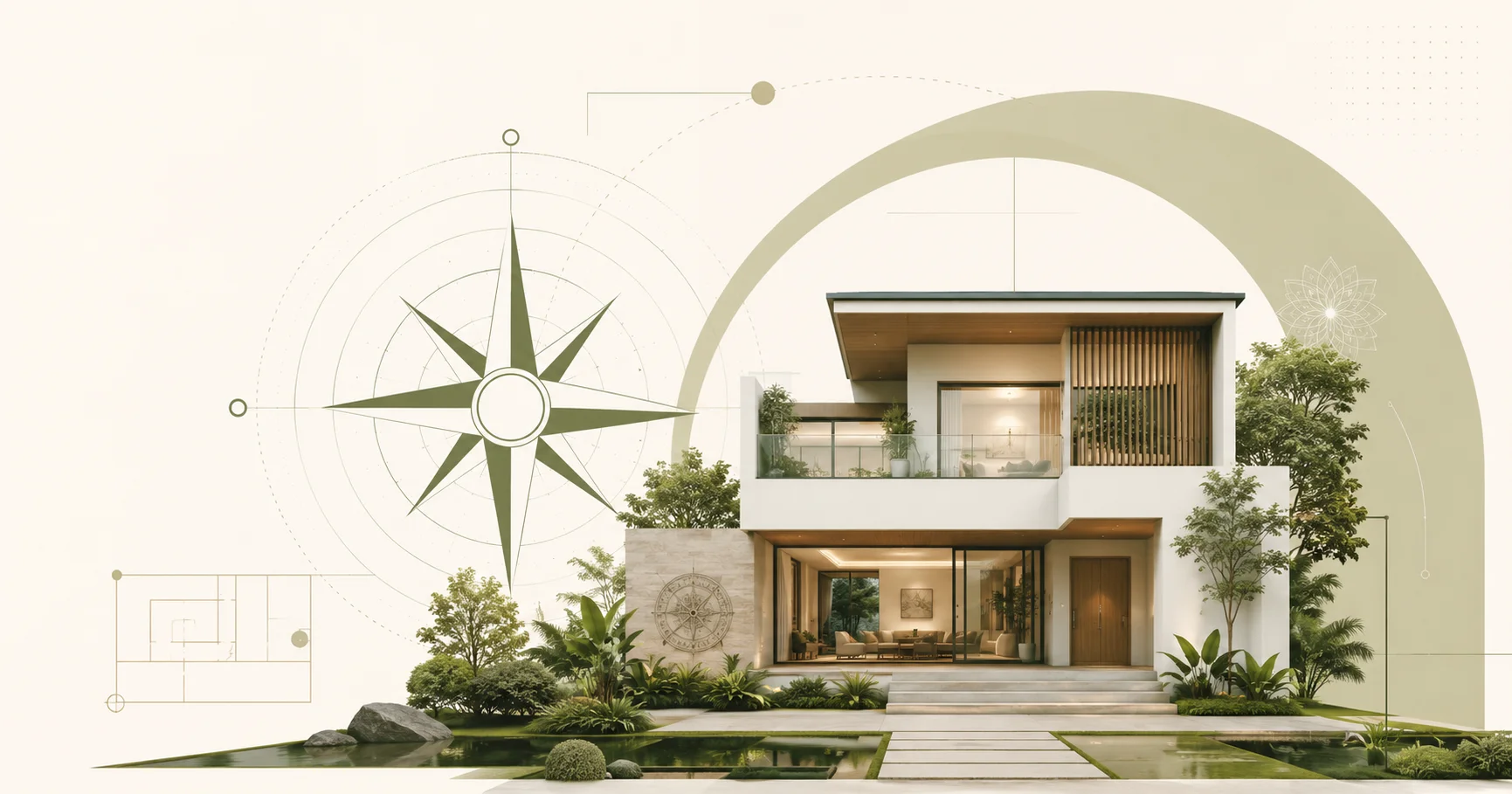
If you've ever walked into a home and just felt... good, chances are Vastu had something to do with it. Not the mystical, incense-and-superstition version people often imagine, but the practical, direction-based logic that decides where your kitchen should sit, which way your main door should face, and why that one bedroom always feels stuffy no matter how many fans you install.
In Bangalore, where the sun, wind, and rain all behave a certain way through the year, Vastu isn't just tradition. It's smart planning dressed up in ancient wisdom. Here are nine homes that got their directions right and what you can learn from each one.
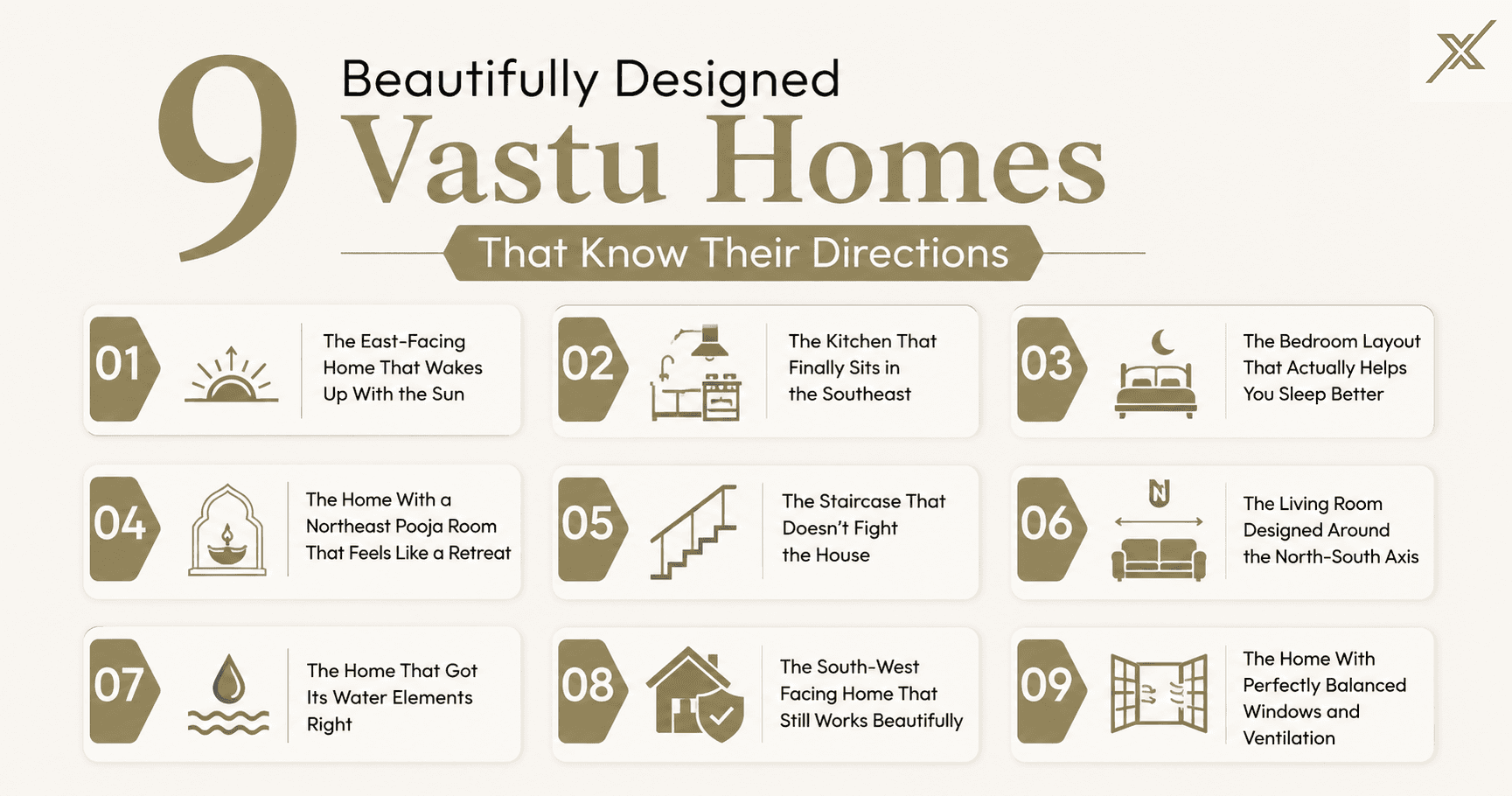
1. The East-Facing Home That Wakes Up With the Sun
There's a reason east-facing homes are so sought after in Bangalore. The morning sun pours into the living areas, main door, and puja room, filling the home with natural light before the day even properly begins.
This particular home used floor-to-ceiling windows on the eastern wall of the living room, letting in soft morning light without the harsh afternoon glare. The main entrance sits slightly north of true east, a Vastu-approved sweet spot that's said to invite prosperity and good energy.
Takeaway: If you're house-hunting, an east-facing plot with the entrance in the northeast corner is considered one of the strongest Vastu positions you can get.
2. The Kitchen That Finally Sits in the Southeast
So many Bangalore apartments get this wrong. The kitchen ends up wherever there's leftover space, usually the northwest or somewhere equally inconvenient. Vastu says the southeast corner belongs to Agni, the fire element, making it the ideal spot for a kitchen.
In this home, the kitchen sits exactly there, with the cooking stove positioned so the cook faces east while working. It's a small detail, but homeowners who've made this switch often talk about how much calmer the space feels, not just look.
Takeaway: Even in a rented flat, you can often shift your stove placement or install a small cooking counter in the southeast zone.
3. The Bedroom Layout That Actually Helps You Sleep Better
Master bedrooms belong in the southwest, according to Vastu, and this home nailed it. The southwest corner is considered the most stable and grounding direction, ideal for the head of the household.
The bed here is placed so the person sleeps with their head toward the south, a position Vastu associates with better rest and lower stress. Whether or not you buy into the energy side of things, there's something to be said for a bedroom that isn't catching the harsh western sun every evening.
Takeaway: Avoid placing your bed directly under a beam or facing the door. Simple fixes, big difference.
4. The Home With a Northeast Pooja Room That Feels Like a Retreat
The northeast, or Ishaan corner, is considered the most sacred direction in Vastu. It's where positive energy is said to enter and settle. This home turned that corner into a small, light-filled pooja room with a single window facing north.
No heavy furniture, no clutter, just a clean, quiet space that instantly feels different from the rest of the house. It's proof that Vastu-compliant doesn't have to mean elaborate. Sometimes it just means empty and calm.
Takeaway: Keep your northeast zone free of heavy storage or bathrooms. Light and open space work best here.
5. The Staircase That Doesn't Fight the House
Staircases are one of the most overlooked elements in Vastu, yet they carry a lot of weight, literally and energetically. This home's staircase rises from north to south, following the natural flow Vastu recommends, and avoids sitting directly above the main entrance.
The result is a layout that feels naturally connected rather than like an afterthought squeezed into a leftover corner.
Takeaway: If you're building or renovating, plan your staircase direction early. It's much harder to fix once the structure is up.
6. The Living Room Designed Around the North-South Axis
Living rooms do best in the north, east, or northeast, areas associated with openness and social energy. This home's living room stretches along the northern wall, with large windows that catch the cooler north light through the day instead of the harsher western sun.
Furniture is arranged so guests naturally face north or east while seated, another small Vastu principle that's easy to apply even if you're not renovating from scratch.
Takeaway: Rearranging your existing furniture to favor these directions costs nothing and can still make a noticeable difference.
7. The Home That Got Its Water Elements Right
Water bodies, whether it's an overhead tank, a borewell, or even a decorative fountain, belong in the northeast as per Vastu. This home's overhead tank sits in the north-east corner of the terrace, and there's a small water feature near the entrance in the same zone.
Water in the wrong direction, especially the southwest, is considered one of the more serious Vastu mistakes. Getting it right here wasn't expensive, just a matter of planning before construction began.
Takeaway: If you're building a new home, this is one detail worth locking in during the design phase, since moving a water tank later is a real hassle.
8. The South-West Facing Home That Still Works Beautifully
Not every plot faces the ideal direction, and that's okay. This home faces southwest, generally considered a tougher direction in Vastu, but the architects compensated smartly. The main door was angled slightly, heavier furniture and storage were placed in the southwest interior zones, and lighter, open spaces were kept toward the north and east.
It's a good reminder that Vastu isn't about giving up on a plot because the direction isn't "perfect." It's about balancing what you have.
Takeaway: Corrections through interior layout and furniture placement can offset a less-than-ideal facing direction.
9. The Home With Perfectly Balanced Windows and Ventilation
Vastu puts a lot of emphasis on airflow, and this home shows why. More windows are placed on the north and east walls than the south and west, letting in gentle morning light and cross ventilation while keeping out the harsher afternoon heat that Bangalore's summers are known for.
It's a simple design choice, but one that keeps the home naturally cooler and brighter without depending entirely on air conditioning or artificial lighting.
Takeaway: When planning window placement, prioritize the north and east sides of your home for both light and long-term energy savings.
Conclusion
What these nine homes have in common isn't luxury or size. It's intentional. Every direction, every room placement, every window was thought through, not just for tradition's sake, but because it genuinely makes the home more comfortable to live in.
You don't need to rebuild your house to bring some of these principles in. Start small: move your bed, shift your kitchen setup, keep your northeast corner light and clutter-free. Vastu, at its heart, is just thoughtful design with a few thousand years of trial and error behind it.
And if you're planning a new home or a renovation in Bangalore, working with the right interior design services in Bangalore can save you a lot of guesswork. The top interior designers in Bangalore already understand how to blend Vastu principles with modern layouts, so you get a home that follows tradition without compromising on style or comfort. The result is a space that feels right the moment you walk in, functional, balanced, and beautifully designed.
If you've ever walked into a home and just felt... good, chances are Vastu had something to do with it. Not the mystical, incense-and-superstition version people often imagine, but the practical, direction-based logic that decides where your kitchen should sit, which way your main door should face, and why that one bedroom always feels stuffy no matter how many fans you install.
In Bangalore, where the sun, wind, and rain all behave a certain way through the year, Vastu isn't just tradition. It's smart planning dressed up in ancient wisdom. Here are nine homes that got their directions right and what you can learn from each one.
1. The East-Facing Home That Wakes Up With the Sun
There's a reason east-facing homes are so sought after in Bangalore. The morning sun pours into the living areas, main door, and puja room, filling the home with natural light before the day even properly begins.
This particular home used floor-to-ceiling windows on the eastern wall of the living room, letting in soft morning light without the harsh afternoon glare. The main entrance sits slightly north of true east, a Vastu-approved sweet spot that's said to invite prosperity and good energy.
Takeaway: If you're house-hunting, an east-facing plot with the entrance in the northeast corner is considered one of the strongest Vastu positions you can get.
2. The Kitchen That Finally Sits in the Southeast
So many Bangalore apartments get this wrong. The kitchen ends up wherever there's leftover space, usually the northwest or somewhere equally inconvenient. Vastu says the southeast corner belongs to Agni, the fire element, making it the ideal spot for a kitchen.
In this home, the kitchen sits exactly there, with the cooking stove positioned so the cook faces east while working. It's a small detail, but homeowners who've made this switch often talk about how much calmer the space feels, not just look.
Takeaway: Even in a rented flat, you can often shift your stove placement or install a small cooking counter in the southeast zone.
3. The Bedroom Layout That Actually Helps You Sleep Better
Master bedrooms belong in the southwest, according to Vastu, and this home nailed it. The southwest corner is considered the most stable and grounding direction, ideal for the head of the household.
The bed here is placed so the person sleeps with their head toward the south, a position Vastu associates with better rest and lower stress. Whether or not you buy into the energy side of things, there's something to be said for a bedroom that isn't catching the harsh western sun every evening.
Takeaway: Avoid placing your bed directly under a beam or facing the door. Simple fixes, big difference.
4. The Home With a Northeast Pooja Room That Feels Like a Retreat
The northeast, or Ishaan corner, is considered the most sacred direction in Vastu. It's where positive energy is said to enter and settle. This home turned that corner into a small, light-filled pooja room with a single window facing north.
No heavy furniture, no clutter, just a clean, quiet space that instantly feels different from the rest of the house. It's proof that Vastu-compliant doesn't have to mean elaborate. Sometimes it just means empty and calm.
Takeaway: Keep your northeast zone free of heavy storage or bathrooms. Light and open space work best here.
5. The Staircase That Doesn't Fight the House
Staircases are one of the most overlooked elements in Vastu, yet they carry a lot of weight, literally and energetically. This home's staircase rises from north to south, following the natural flow Vastu recommends, and avoids sitting directly above the main entrance.
The result is a layout that feels naturally connected rather than like an afterthought squeezed into a leftover corner.
Takeaway: If you're building or renovating, plan your staircase direction early. It's much harder to fix once the structure is up.
6. The Living Room Designed Around the North-South Axis
Living rooms do best in the north, east, or northeast, areas associated with openness and social energy. This home's living room stretches along the northern wall, with large windows that catch the cooler north light through the day instead of the harsher western sun.
Furniture is arranged so guests naturally face north or east while seated, another small Vastu principle that's easy to apply even if you're not renovating from scratch.
Takeaway: Rearranging your existing furniture to favor these directions costs nothing and can still make a noticeable difference.
7. The Home That Got Its Water Elements Right
Water bodies, whether it's an overhead tank, a borewell, or even a decorative fountain, belong in the northeast as per Vastu. This home's overhead tank sits in the north-east corner of the terrace, and there's a small water feature near the entrance in the same zone.
Water in the wrong direction, especially the southwest, is considered one of the more serious Vastu mistakes. Getting it right here wasn't expensive, just a matter of planning before construction began.
Takeaway: If you're building a new home, this is one detail worth locking in during the design phase, since moving a water tank later is a real hassle.
8. The South-West Facing Home That Still Works Beautifully
Not every plot faces the ideal direction, and that's okay. This home faces southwest, generally considered a tougher direction in Vastu, but the architects compensated smartly. The main door was angled slightly, heavier furniture and storage were placed in the southwest interior zones, and lighter, open spaces were kept toward the north and east.
It's a good reminder that Vastu isn't about giving up on a plot because the direction isn't "perfect." It's about balancing what you have.
Takeaway: Corrections through interior layout and furniture placement can offset a less-than-ideal facing direction.
9. The Home With Perfectly Balanced Windows and Ventilation
Vastu puts a lot of emphasis on airflow, and this home shows why. More windows are placed on the north and east walls than the south and west, letting in gentle morning light and cross ventilation while keeping out the harsher afternoon heat that Bangalore's summers are known for.
It's a simple design choice, but one that keeps the home naturally cooler and brighter without depending entirely on air conditioning or artificial lighting.
Takeaway: When planning window placement, prioritize the north and east sides of your home for both light and long-term energy savings.
Conclusion
What these nine homes have in common isn't luxury or size. It's intentional. Every direction, every room placement, every window was thought through, not just for tradition's sake, but because it genuinely makes the home more comfortable to live in.
You don't need to rebuild your house to bring some of these principles in. Start small: move your bed, shift your kitchen setup, keep your northeast corner light and clutter-free. Vastu, at its heart, is just thoughtful design with a few thousand years of trial and error behind it.
And if you're planning a new home or a renovation in Bangalore, working with the right interior design services in Bangalore can save you a lot of guesswork. The top interior designers in Bangalore already understand how to blend Vastu principles with modern layouts, so you get a home that follows tradition without compromising on style or comfort. The result is a space that feels right the moment you walk in, functional, balanced, and beautifully designed.
Let's
Build
something
enduring
Every exceptional space begins with a conversation. We'd be honored to learn about your vision.
Let's
Build
something
enduring
Every exceptional space begins with a conversation. We'd be honored to learn about your vision.
Let's
Build
something
enduring
Every exceptional space begins with a conversation. We'd be honored to learn about your vision.