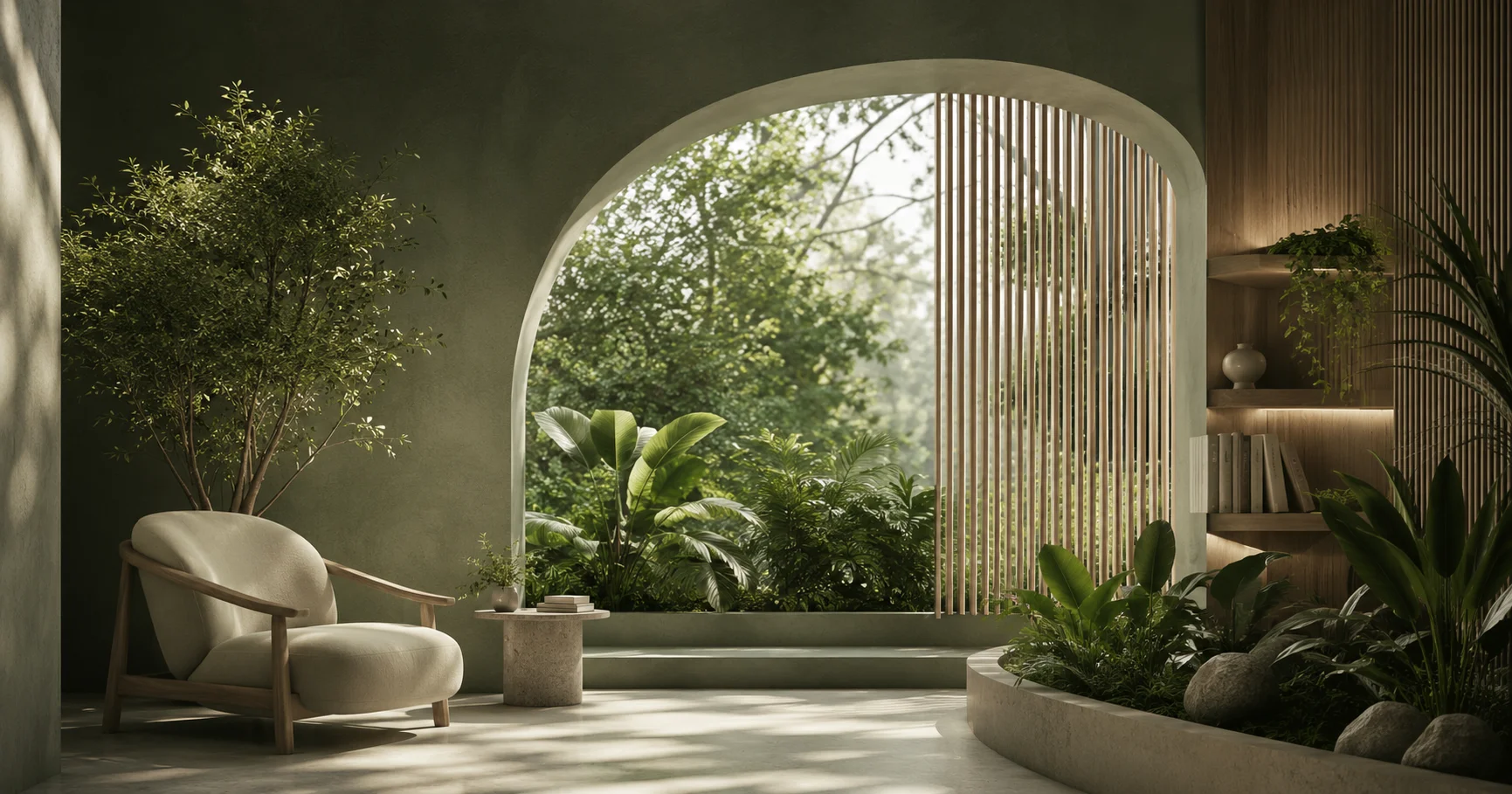
Biophilic Designs are the need of Bangalore's hectic working culture. Long commutes, back-to-back meetings, endless screen time, by the time you get home, you want your space to feel like an exhale, not an extension of the chaos outside. That is exactly why biophilic design has quietly become one of the most searched and talked-about interior trends right now. And if you have been speaking to interior designers in Bangalore lately, chances are this has already come up.
Biophilic design is simply the practice of bringing nature into the spaces we live in. Not just a plant on a windowsill, but a whole approach to how a home looks, feels, and breathes. In 2026, it has moved from being a design buzzword to something homeowners across Whitefield, Indiranagar, and Sarjapur Road are genuinely asking for.
What Is Biophilic Design?
The word "biophilic" comes from the idea that humans have an innate need to connect with nature. When you spend most of your day indoors, that need does not go away. Biophilic design seeks to meet that need by incorporating natural materials, light, greenery, textures, and patterns into the home.
At its core, it is about crafting interiors inspired by organic elements to create a sense of comfort and well-being in your home. It is not a style you can achieve with a few decor pieces; it is rooted in the timeless practice of connecting with nature, weaving that experience through choices in form, materials, and visual details.
It is not about making your home look like a forest. It is about making it feel alive.
Why is Biophilic Design a Big Deal in 2026?
A few things have happened together to make biophilic design land so hard this year.
First, urbanisation. Bangalore has grown faster than most cities in India, and with that growth comes the inevitable trade-off: less green space, more concrete, and longer hours indoors. The increasing time spent indoors has fueled a desire to bring nature into built environments, directly addressing issues like stress and anxiety.
Second, there is real science behind it now. One interior study found that a living room redesigned with biophilic principles, plants by windows, layered light and dark textiles, natural wood furniture, and daylight-maximising furniture placement led to a 30% reduction in reported stress. That is not a small number.
Third, and this one matters in Bangalore specifically, the city's climate is perfect for it. You have good natural light for most of the year, mild temperatures that make indoor plants thrive, and a culture that has always had a relationship with courtyards, gardens, and open-air living. Biophilic design is, in many ways, just a modern interpretation of how Bangalore homes used to be built.
What Does It Actually Look Like Inside a Home?
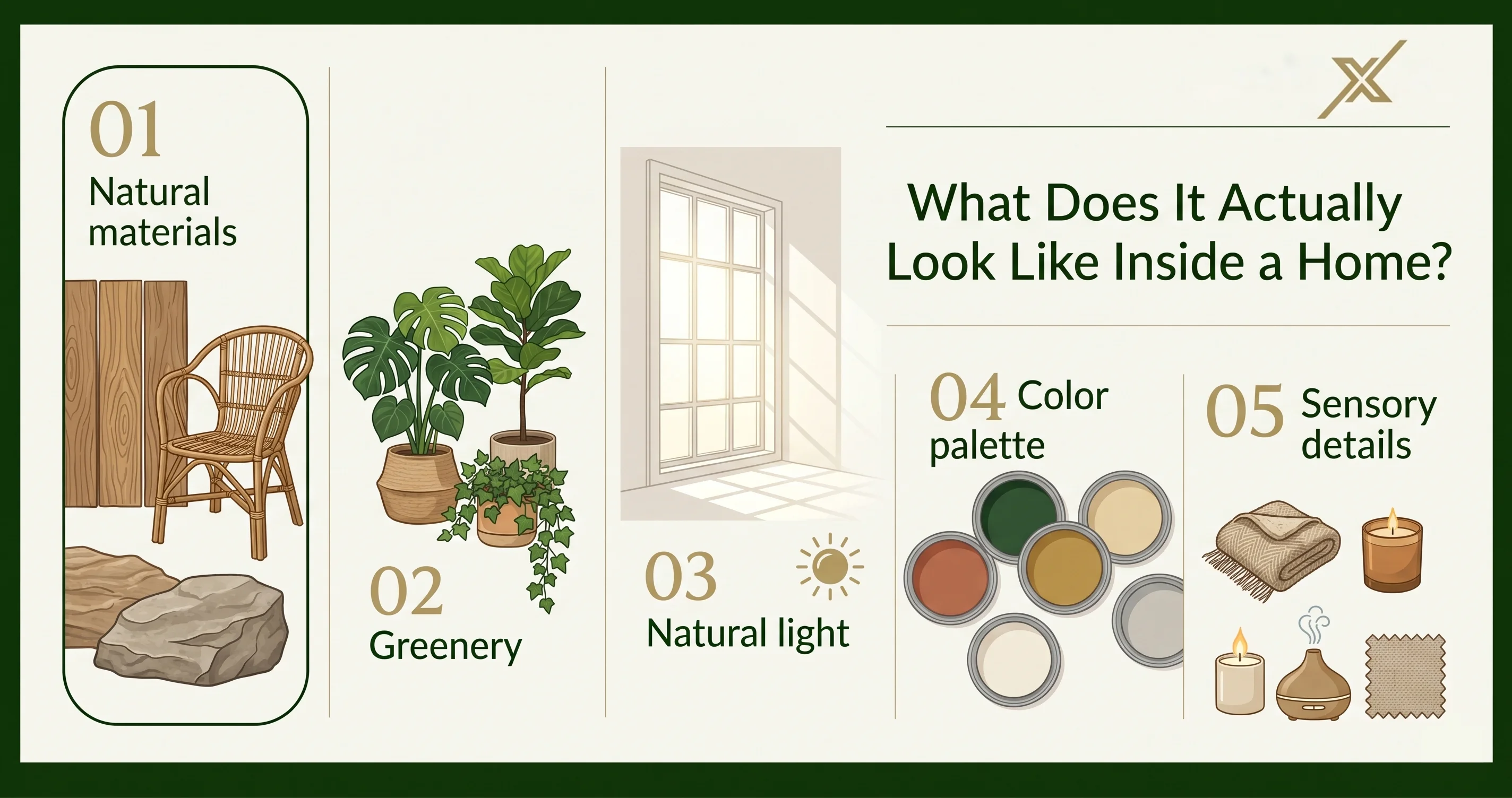
This is where it gets practical. Biophilic design is not one look. It is a set of principles that can show up in many different ways depending on the size of your space, your budget, and your personal taste.
Natural materials: wood, stone, cane, and jute; these are the building blocks. A reclaimed wood dining table, a stone basin in the bathroom, and woven cane on cabinet shutters. Curved architectural forms, earthy palettes, textured stone surfaces, botanical influences, and fluid spatial layouts are becoming defining characteristics of modern biophilic interiors.
Greenery: This one is obvious, but how you use plants matters. A single large Fiddle Leaf Fig in a bright corner does more for a room than twelve small plants scattered around. Vertical gardens on balconies, herb planters in the kitchen, trailing pothos on shelves, all of these work well in Bangalore apartments where space is often limited.
Natural light Biophilic interiors incorporate natural light, natural ventilation, and organic forms to create healthier and more restorative atmospheres. This means thinking about how light moves through a room across the day, not just whether there is a window. Sheer curtains instead of heavy drapes, mirrors placed to bounce light, furniture arranged to keep pathways open, small decisions that make a significant difference.
Color palette: Warm, earthy tones, rich terracottas, deep oranges, and forest green are taking center stage, replacing cooler greys. For Bangalore homes, these colors feel especially right. They complement the city's vegetation and sit well in both natural and artificial light.
Sensory details: Biophilic design engages more than just sight. Textured materials such as stone, timber, and plaster introduce warmth and tactility, while quieter finishes reduce noise. The goal is a space that feels calming to be in, not just nice to photograph.
Room by Room: How Biophilic Designs Work in Bangalore Homes
Living room: A statement wall in textured lime plaster or exposed brick, a wooden coffee table with raw edges, indoor plants in terracotta pots, and warm lighting with dimmers. This is the most common starting point for biophilic redesigns in Bangalore apartments.
Bedroom: Natural linen bedding, wooden flooring or wood-look tiles, a small bedside plant like a Snake Plant or Peace Lily, and sheer curtains that let in soft morning light. The idea is to create a space that slows you down when you enter it.
Kitchen: In high-rise apartments, window-side preparation zones, planter-integrated islands, and internal greenery help bring nature into daily routines. Growing herbs within the kitchen strengthens the relationship between food, nature, and well-being. Even a small herb pot with tulsi, mint, or curry leaves counts.
Balcony: In Bangalore, balconies are prime real estate for biophilic design. A vertical garden, a wooden deck, some rattan chairs, and a few large potted plants can turn a standard apartment balcony into a genuine retreat.
Is Biophlic Design Expensive?
Not necessarily. Biophilic design scales beautifully. You can start small, with a few plants, a jute rug, switching out synthetic cushion covers for cotton or linen. Or you can go deeper with a full redesign involving natural stone surfaces, wooden joinery, and integrated planters.
The key is intention. By 2026, biophilic design is firmly established as a design responsibility rather than a passing trend. That means skilled designers are getting better and more creative with it at every price point.
Biophilic Design and Bangalore's New Homeowners
There is something worth noting about the generation currently buying and decorating homes in Bangalore. They have grown up with increasing awareness around wellness, sustainability, and mindful living. They are not just picking colors and furniture, they are thinking about how a space will make them feel day in and day out.
The market is expanding as more individuals prioritize well-being and a harmonious connection with nature. This is showing up clearly in Bangalore's interior design conversations. Clients are asking fewer questions about trends and more questions about how a space can support their health, focus, and mood.
Conclusion
Your home should be the one place in Bangalore where the noise stops. Biophilic design, done well, creates exactly that, spaces that feel grounded, calm, and quietly alive. Whether you are starting fresh in a new flat in Electronic City or renovating a villa in JP Nagar, the principles remain the same: bring in natural light, use honest materials, add greenery where you can, and let the space breathe.
If you are thinking about going this route, working with experienced residential interior designers in Bangalore makes a real difference. They know the local climate, understand how light behaves in different parts of the city, and can translate the biophilic approach into something that fits your specific home and lifestyle. The best interior designers in Bangalore are already deeply familiar with this design language, because for a city like ours, it was never really a trend. It was always just good sense.
Biophilic Designs are the need of Bangalore's hectic working culture. Long commutes, back-to-back meetings, endless screen time, by the time you get home, you want your space to feel like an exhale, not an extension of the chaos outside. That is exactly why biophilic design has quietly become one of the most searched and talked-about interior trends right now. And if you have been speaking to interior designers in Bangalore lately, chances are this has already come up.
Biophilic design is simply the practice of bringing nature into the spaces we live in. Not just a plant on a windowsill, but a whole approach to how a home looks, feels, and breathes. In 2026, it has moved from being a design buzzword to something homeowners across Whitefield, Indiranagar, and Sarjapur Road are genuinely asking for.
What Is Biophilic Design?
The word "biophilic" comes from the idea that humans have an innate need to connect with nature. When you spend most of your day indoors, that need does not go away. Biophilic design seeks to meet that need by incorporating natural materials, light, greenery, textures, and patterns into the home.
At its core, it is about crafting interiors inspired by organic elements to create a sense of comfort and well-being in your home. It is not a style you can achieve with a few decor pieces; it is rooted in the timeless practice of connecting with nature, weaving that experience through choices in form, materials, and visual details.
It is not about making your home look like a forest. It is about making it feel alive.
Why is Biophilic Design a Big Deal in 2026?
A few things have happened together to make biophilic design land so hard this year.
First, urbanisation. Bangalore has grown faster than most cities in India, and with that growth comes the inevitable trade-off: less green space, more concrete, and longer hours indoors. The increasing time spent indoors has fueled a desire to bring nature into built environments, directly addressing issues like stress and anxiety.
Second, there is real science behind it now. One interior study found that a living room redesigned with biophilic principles, plants by windows, layered light and dark textiles, natural wood furniture, and daylight-maximising furniture placement led to a 30% reduction in reported stress. That is not a small number.
Third, and this one matters in Bangalore specifically, the city's climate is perfect for it. You have good natural light for most of the year, mild temperatures that make indoor plants thrive, and a culture that has always had a relationship with courtyards, gardens, and open-air living. Biophilic design is, in many ways, just a modern interpretation of how Bangalore homes used to be built.
What Does It Actually Look Like Inside a Home?
This is where it gets practical. Biophilic design is not one look. It is a set of principles that can show up in many different ways depending on the size of your space, your budget, and your personal taste.
Natural materials: wood, stone, cane, and jute; these are the building blocks. A reclaimed wood dining table, a stone basin in the bathroom, and woven cane on cabinet shutters. Curved architectural forms, earthy palettes, textured stone surfaces, botanical influences, and fluid spatial layouts are becoming defining characteristics of modern biophilic interiors.
Greenery: This one is obvious, but how you use plants matters. A single large Fiddle Leaf Fig in a bright corner does more for a room than twelve small plants scattered around. Vertical gardens on balconies, herb planters in the kitchen, trailing pothos on shelves, all of these work well in Bangalore apartments where space is often limited.
Natural light Biophilic interiors incorporate natural light, natural ventilation, and organic forms to create healthier and more restorative atmospheres. This means thinking about how light moves through a room across the day, not just whether there is a window. Sheer curtains instead of heavy drapes, mirrors placed to bounce light, furniture arranged to keep pathways open, small decisions that make a significant difference.
Color palette: Warm, earthy tones, rich terracottas, deep oranges, and forest green are taking center stage, replacing cooler greys. For Bangalore homes, these colors feel especially right. They complement the city's vegetation and sit well in both natural and artificial light.
Sensory details: Biophilic design engages more than just sight. Textured materials such as stone, timber, and plaster introduce warmth and tactility, while quieter finishes reduce noise. The goal is a space that feels calming to be in, not just nice to photograph.
Room by Room: How Biophilic Designs Work in Bangalore Homes
Living room: A statement wall in textured lime plaster or exposed brick, a wooden coffee table with raw edges, indoor plants in terracotta pots, and warm lighting with dimmers. This is the most common starting point for biophilic redesigns in Bangalore apartments.
Bedroom: Natural linen bedding, wooden flooring or wood-look tiles, a small bedside plant like a Snake Plant or Peace Lily, and sheer curtains that let in soft morning light. The idea is to create a space that slows you down when you enter it.
Kitchen: In high-rise apartments, window-side preparation zones, planter-integrated islands, and internal greenery help bring nature into daily routines. Growing herbs within the kitchen strengthens the relationship between food, nature, and well-being. Even a small herb pot with tulsi, mint, or curry leaves counts.
Balcony: In Bangalore, balconies are prime real estate for biophilic design. A vertical garden, a wooden deck, some rattan chairs, and a few large potted plants can turn a standard apartment balcony into a genuine retreat.
Is Biophlic Design Expensive?
Not necessarily. Biophilic design scales beautifully. You can start small, with a few plants, a jute rug, switching out synthetic cushion covers for cotton or linen. Or you can go deeper with a full redesign involving natural stone surfaces, wooden joinery, and integrated planters.
The key is intention. By 2026, biophilic design is firmly established as a design responsibility rather than a passing trend. That means skilled designers are getting better and more creative with it at every price point.
Biophilic Design and Bangalore's New Homeowners
There is something worth noting about the generation currently buying and decorating homes in Bangalore. They have grown up with increasing awareness around wellness, sustainability, and mindful living. They are not just picking colors and furniture, they are thinking about how a space will make them feel day in and day out.
The market is expanding as more individuals prioritize well-being and a harmonious connection with nature. This is showing up clearly in Bangalore's interior design conversations. Clients are asking fewer questions about trends and more questions about how a space can support their health, focus, and mood.
Conclusion
Your home should be the one place in Bangalore where the noise stops. Biophilic design, done well, creates exactly that, spaces that feel grounded, calm, and quietly alive. Whether you are starting fresh in a new flat in Electronic City or renovating a villa in JP Nagar, the principles remain the same: bring in natural light, use honest materials, add greenery where you can, and let the space breathe.
If you are thinking about going this route, working with experienced residential interior designers in Bangalore makes a real difference. They know the local climate, understand how light behaves in different parts of the city, and can translate the biophilic approach into something that fits your specific home and lifestyle. The best interior designers in Bangalore are already deeply familiar with this design language, because for a city like ours, it was never really a trend. It was always just good sense.
Let's
Build
something
enduring
Every exceptional space begins with a conversation. We'd be honored to learn about your vision.
Let's
Build
something
enduring
Every exceptional space begins with a conversation. We'd be honored to learn about your vision.
Let's
Build
something
enduring
Every exceptional space begins with a conversation. We'd be honored to learn about your vision.