Top 10 Indian Flooring Materials for Your Next Eco-Friendly Home Renovation
Are you renovating your home? Here's something people often overlook: the flooring. It's not just about looks. It decides how long your floor lasts, how much it helps (or hurts) the planet, and honestly, how nice it feels under your feet every single day.
Good news, though. India already has some brilliant eco-friendly flooring options. And most of them aren't new inventions. They've been part of Indian homes for generations, way before "sustainable" became a trendy word. Let's walk through 10 of the best ones for your next renovation.
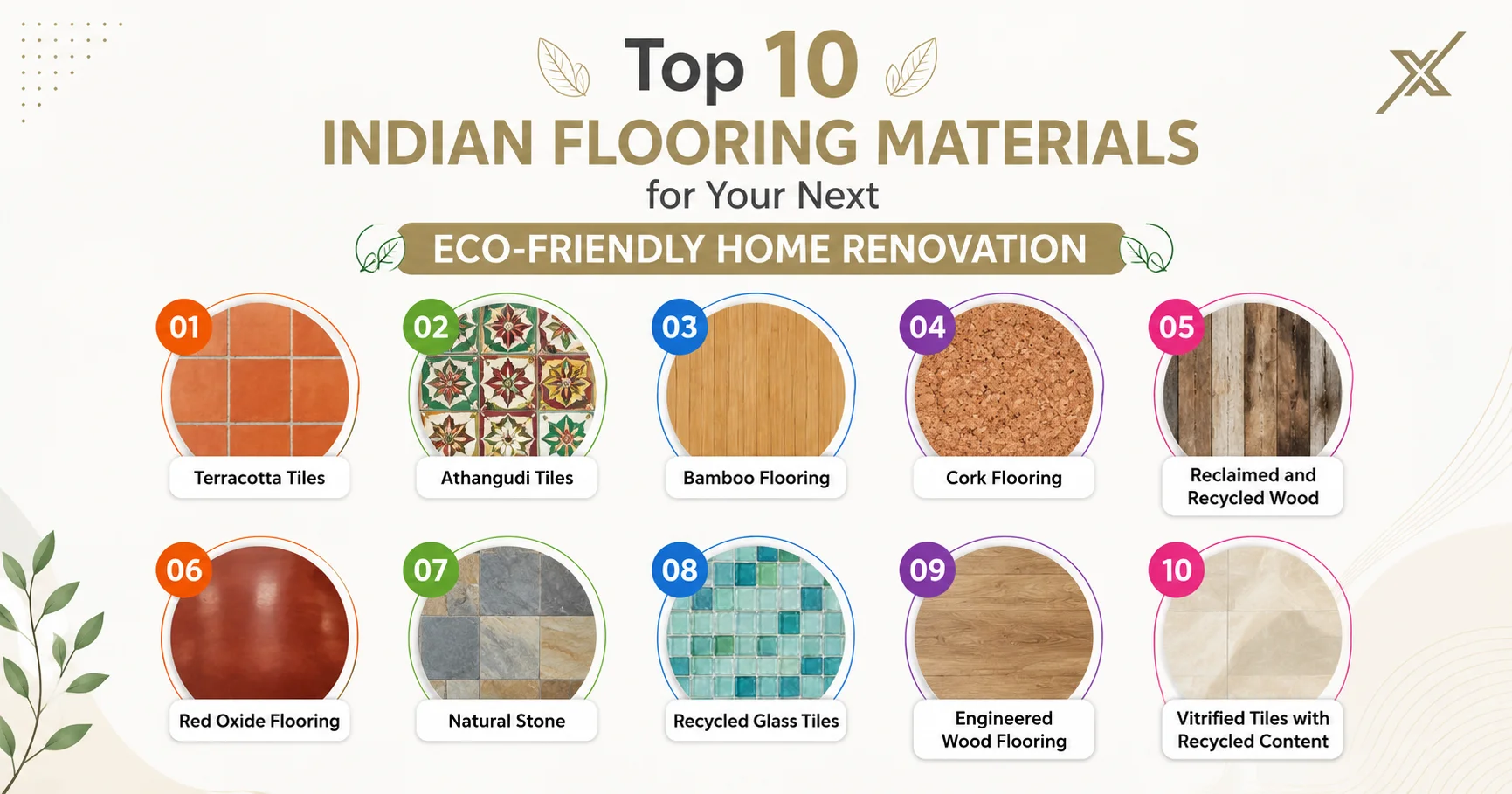
1. Terracotta Tiles
You've probably seen terracotta floors before, especially in South Indian homes. It's simply baked clay. Nothing complicated. But it does one thing really well: it keeps rooms cool even when it's blazing hot outside. Less heat means less AC, which means a smaller electricity bill too.
No two terracotta tiles ever look exactly alike. The clay gives each one a slightly different shade, so your floor ends up with its own little personality. And cleaning it? Just sweep and mop. That's it. One thing worth knowing: terracotta can crack under heavy weight, so it's better suited for bedrooms and living rooms rather than garages.
2. Athangudi Tiles
If you like a floor that comes with a story, Athangudi tiles are worth exploring. They're named after a small village in Tamil Nadu, where craftsmen still make each tile by hand. They mix cement with natural oxide colours to get those deep reds, blues, and yellows you often see in traditional homes.
Since every tile is handmade, you'll never find two that are exactly the same. That's what makes them special. No plastic, no chemicals, just natural material shaped by skilled hands. They don't even need polishing; just regular sweeping does the job. The only downside is that they cost a little more and take time to source, so it helps to plan ahead.
3. Bamboo Flooring
Here's something most people don't know: bamboo isn't actually wood. It's grass. And it grows unbelievably fast. Some types are ready to use in just three to five years, while trees can take decades to grow that big. Once it's turned into flooring, bamboo looks a lot like real wood, but it's usually cheaper and doesn't put pressure on forests.
It gives rooms a warm, cosy feel. Works beautifully in bedrooms, living rooms, and even home offices. Just keep in mind, bamboo can scratch a bit more easily than harder wood, so if you've got a dog or cat with sharp claws, that's worth thinking about.
4. Cork Flooring
Cork comes from the bark of cork oak trees. And here's the interesting part: peeling off the bark doesn't hurt the tree at all. It just grows back over a few years. That's what makes cork such a renewable material.
Walking on cork actually feels nice; it's soft and a little bouncy underfoot. Great for kids' rooms or spaces where little ones spend a lot of time on the floor. It also blocks out noise and keeps rooms a bit cooler. Just one thing: cork doesn't handle standing water well, so skip it for bathrooms and kitchens.
5. Reclaimed and Recycled Wood
Instead of cutting down new trees, this flooring reuses wood from old buildings, barns, or furniture that would've otherwise ended up as waste. Every plank carries a bit of history, old nail marks, natural wear, and a grain pattern you just can't recreate with new wood.
You get all the warmth of solid wood, without the guilt of more trees being cut. Since the wood has already settled with age, it's less likely to warp later. The only challenge is that finding good-quality reclaimed wood takes a bit of effort, and it may need some sanding before it's ready for your floor.
6. Red Oxide Flooring
Red oxide flooring is a proper Indian classic, the kind you'd find in your grandparents' home. It's made from clay, sand, and iron oxide, all completely natural, layered and polished by hand until it's smooth.
It keeps homes cool, which really matters in Indian summers, and it actually looks better with age, developing this deep, rich shine over the years. With a little polishing now and then, it can last for decades. It's also easier on your wallet compared to imported stone, so you get a premium look without the premium price tag.
7. Natural Stone (Granite and Kota Stone)
Stone flooring is about as close to nature as you can get. It's just cut and polished, nothing added, nothing artificial. Granite is incredibly tough and barely scratches, which is why it works so well in busy spots like kitchens and living rooms.
Kota stone, which comes from Rajasthan, is another great homegrown option. It stays cool underfoot, costs less than granite or marble, and has been a trusted choice in Indian homes for generations. Both stones are heavy, though, and need skilled hands to install properly, so keep that in mind while planning your renovation timeline.
8. Recycled Glass Tiles
These tiles are made from crushed glass, often old bottles or factory waste, melted down and reshaped into tiles. They come in loads of colours and finishes, and since glass reflects light so well, they can genuinely make a room feel brighter and more open.
You'll usually spot these in bathrooms, kitchen backsplashes, or around swimming pools, since they handle moisture without any trouble. Cleaning them is easy too, just a wipe with glass cleaner. One small thing: glass can feel a bit cold underfoot, so it's better used as an accent rather than covering your whole floor.
9. Engineered Wood Flooring
Love the look of real wood but don't want to spend a fortune or use too much of it? Engineered wood is a smart middle ground. It has a thin layer of real wood on top, sitting on plywood layers underneath. That means it uses far less hardwood overall, while still giving you that authentic wood look.
It also handles humidity much better than solid wood, which is a real blessing during monsoon season, when solid wood tends to swell and warp. If you want wood flooring without the higher cost or environmental impact, this is worth considering.
10. Vitrified Tiles with Recycled Content
A lot of brands now make vitrified tiles using recycled glass or factory waste mixed into the clay. These tiles are strong, don't scratch easily, and are simple to keep clean, all while using fewer new raw materials in the process.
They're a great fit for busy areas like hallways, kitchens, and living rooms, spaces that deal with daily foot traffic. If you want something sleek and modern without giving up on sustainability, this is a smart, practical pick.
How to Pick the Right Eco-Friendly Flooring for Your Home
With this many options, how do you actually decide? Here's a simple way to think it through.
If you live somewhere hot, terracotta, natural stone, and red oxide keep rooms naturally cool, and that can genuinely bring your electricity bills down. For busy areas like living rooms and kitchens, go with something tough: granite, vitrified tiles, or engineered wood can take daily wear without any fuss.
If budget is your main concern, bamboo, engineered wood, and recycled tiles give you great value without cutting corners on sustainability. Want something low-maintenance? Natural stone and terracotta barely need any upkeep beyond regular sweeping and mopping.
And don't forget style. Think about the mood you're going for, earthy and rustic, or clean and modern. Every material brings its own personality, so pick whichever one feels right for your space. One last tip, ask where the material comes from. Locally sourced flooring usually has a smaller carbon footprint since it doesn't have to travel far to reach your home.
Honestly, it helps to talk to your interior designer or contractor early in the process. They'll know exactly which materials work best for your rooms, your climate, and your budget, so you don't end up compromising halfway through the renovation.
A Quick Word on Cost vs. Long-Term Value
Yes, some eco-friendly flooring costs a bit more upfront than regular tiles. But most of them make up for it over time. They last longer, need less maintenance, and can even bring your cooling costs down in summer. So you might spend a little extra at the start, but you'll likely save more in the long run, and you'll end up with a home that's genuinely kinder to the environment.
Conclusion
Going eco-friendly with your flooring doesn't mean giving up on style, comfort, or durability. Whether it's the earthy charm of terracotta tiles, the fast-growing sustainability of bamboo flooring, or the timeless strength of natural stone, India has plenty of sustainable flooring options for every budget and taste. The key is simply matching the material to your climate, your lifestyle, and your design goals. And if you're still unsure which one's right for your home, it helps to talk to interior design experts in Bangalore who understand the local weather, space constraints, and material availability. Good interior design services in Bangalore can guide you through the entire flooring decision, so your next renovation ends up looking beautiful and staying kind to the planet, one floor at a time.
Are you renovating your home? Here's something people often overlook: the flooring. It's not just about looks. It decides how long your floor lasts, how much it helps (or hurts) the planet, and honestly, how nice it feels under your feet every single day.
Good news, though. India already has some brilliant eco-friendly flooring options. And most of them aren't new inventions. They've been part of Indian homes for generations, way before "sustainable" became a trendy word. Let's walk through 10 of the best ones for your next renovation.
1. Terracotta Tiles
You've probably seen terracotta floors before, especially in South Indian homes. It's simply baked clay. Nothing complicated. But it does one thing really well: it keeps rooms cool even when it's blazing hot outside. Less heat means less AC, which means a smaller electricity bill too.
No two terracotta tiles ever look exactly alike. The clay gives each one a slightly different shade, so your floor ends up with its own little personality. And cleaning it? Just sweep and mop. That's it. One thing worth knowing: terracotta can crack under heavy weight, so it's better suited for bedrooms and living rooms rather than garages.
2. Athangudi Tiles
If you like a floor that comes with a story, Athangudi tiles are worth exploring. They're named after a small village in Tamil Nadu, where craftsmen still make each tile by hand. They mix cement with natural oxide colours to get those deep reds, blues, and yellows you often see in traditional homes.
Since every tile is handmade, you'll never find two that are exactly the same. That's what makes them special. No plastic, no chemicals, just natural material shaped by skilled hands. They don't even need polishing; just regular sweeping does the job. The only downside is that they cost a little more and take time to source, so it helps to plan ahead.
3. Bamboo Flooring
Here's something most people don't know: bamboo isn't actually wood. It's grass. And it grows unbelievably fast. Some types are ready to use in just three to five years, while trees can take decades to grow that big. Once it's turned into flooring, bamboo looks a lot like real wood, but it's usually cheaper and doesn't put pressure on forests.
It gives rooms a warm, cosy feel. Works beautifully in bedrooms, living rooms, and even home offices. Just keep in mind, bamboo can scratch a bit more easily than harder wood, so if you've got a dog or cat with sharp claws, that's worth thinking about.
4. Cork Flooring
Cork comes from the bark of cork oak trees. And here's the interesting part: peeling off the bark doesn't hurt the tree at all. It just grows back over a few years. That's what makes cork such a renewable material.
Walking on cork actually feels nice; it's soft and a little bouncy underfoot. Great for kids' rooms or spaces where little ones spend a lot of time on the floor. It also blocks out noise and keeps rooms a bit cooler. Just one thing: cork doesn't handle standing water well, so skip it for bathrooms and kitchens.
5. Reclaimed and Recycled Wood
Instead of cutting down new trees, this flooring reuses wood from old buildings, barns, or furniture that would've otherwise ended up as waste. Every plank carries a bit of history, old nail marks, natural wear, and a grain pattern you just can't recreate with new wood.
You get all the warmth of solid wood, without the guilt of more trees being cut. Since the wood has already settled with age, it's less likely to warp later. The only challenge is that finding good-quality reclaimed wood takes a bit of effort, and it may need some sanding before it's ready for your floor.
6. Red Oxide Flooring
Red oxide flooring is a proper Indian classic, the kind you'd find in your grandparents' home. It's made from clay, sand, and iron oxide, all completely natural, layered and polished by hand until it's smooth.
It keeps homes cool, which really matters in Indian summers, and it actually looks better with age, developing this deep, rich shine over the years. With a little polishing now and then, it can last for decades. It's also easier on your wallet compared to imported stone, so you get a premium look without the premium price tag.
7. Natural Stone (Granite and Kota Stone)
Stone flooring is about as close to nature as you can get. It's just cut and polished, nothing added, nothing artificial. Granite is incredibly tough and barely scratches, which is why it works so well in busy spots like kitchens and living rooms.
Kota stone, which comes from Rajasthan, is another great homegrown option. It stays cool underfoot, costs less than granite or marble, and has been a trusted choice in Indian homes for generations. Both stones are heavy, though, and need skilled hands to install properly, so keep that in mind while planning your renovation timeline.
8. Recycled Glass Tiles
These tiles are made from crushed glass, often old bottles or factory waste, melted down and reshaped into tiles. They come in loads of colours and finishes, and since glass reflects light so well, they can genuinely make a room feel brighter and more open.
You'll usually spot these in bathrooms, kitchen backsplashes, or around swimming pools, since they handle moisture without any trouble. Cleaning them is easy too, just a wipe with glass cleaner. One small thing: glass can feel a bit cold underfoot, so it's better used as an accent rather than covering your whole floor.
9. Engineered Wood Flooring
Love the look of real wood but don't want to spend a fortune or use too much of it? Engineered wood is a smart middle ground. It has a thin layer of real wood on top, sitting on plywood layers underneath. That means it uses far less hardwood overall, while still giving you that authentic wood look.
It also handles humidity much better than solid wood, which is a real blessing during monsoon season, when solid wood tends to swell and warp. If you want wood flooring without the higher cost or environmental impact, this is worth considering.
10. Vitrified Tiles with Recycled Content
A lot of brands now make vitrified tiles using recycled glass or factory waste mixed into the clay. These tiles are strong, don't scratch easily, and are simple to keep clean, all while using fewer new raw materials in the process.
They're a great fit for busy areas like hallways, kitchens, and living rooms, spaces that deal with daily foot traffic. If you want something sleek and modern without giving up on sustainability, this is a smart, practical pick.
How to Pick the Right Eco-Friendly Flooring for Your Home
With this many options, how do you actually decide? Here's a simple way to think it through.
If you live somewhere hot, terracotta, natural stone, and red oxide keep rooms naturally cool, and that can genuinely bring your electricity bills down. For busy areas like living rooms and kitchens, go with something tough: granite, vitrified tiles, or engineered wood can take daily wear without any fuss.
If budget is your main concern, bamboo, engineered wood, and recycled tiles give you great value without cutting corners on sustainability. Want something low-maintenance? Natural stone and terracotta barely need any upkeep beyond regular sweeping and mopping.
And don't forget style. Think about the mood you're going for, earthy and rustic, or clean and modern. Every material brings its own personality, so pick whichever one feels right for your space. One last tip, ask where the material comes from. Locally sourced flooring usually has a smaller carbon footprint since it doesn't have to travel far to reach your home.
Honestly, it helps to talk to your interior designer or contractor early in the process. They'll know exactly which materials work best for your rooms, your climate, and your budget, so you don't end up compromising halfway through the renovation.
A Quick Word on Cost vs. Long-Term Value
Yes, some eco-friendly flooring costs a bit more upfront than regular tiles. But most of them make up for it over time. They last longer, need less maintenance, and can even bring your cooling costs down in summer. So you might spend a little extra at the start, but you'll likely save more in the long run, and you'll end up with a home that's genuinely kinder to the environment.
Conclusion
Going eco-friendly with your flooring doesn't mean giving up on style, comfort, or durability. Whether it's the earthy charm of terracotta tiles, the fast-growing sustainability of bamboo flooring, or the timeless strength of natural stone, India has plenty of sustainable flooring options for every budget and taste. The key is simply matching the material to your climate, your lifestyle, and your design goals. And if you're still unsure which one's right for your home, it helps to talk to interior design experts in Bangalore who understand the local weather, space constraints, and material availability. Good interior design services in Bangalore can guide you through the entire flooring decision, so your next renovation ends up looking beautiful and staying kind to the planet, one floor at a time.
Let's
Build
something
enduring
Every exceptional space begins with a conversation. We'd be honored to learn about your vision.
Let's
Build
something
enduring
Every exceptional space begins with a conversation. We'd be honored to learn about your vision.
Let's
Build
something
enduring
Every exceptional space begins with a conversation. We'd be honored to learn about your vision.