How Long Does an Interior Design Project Take? A Step-by-Step Timeline Guide
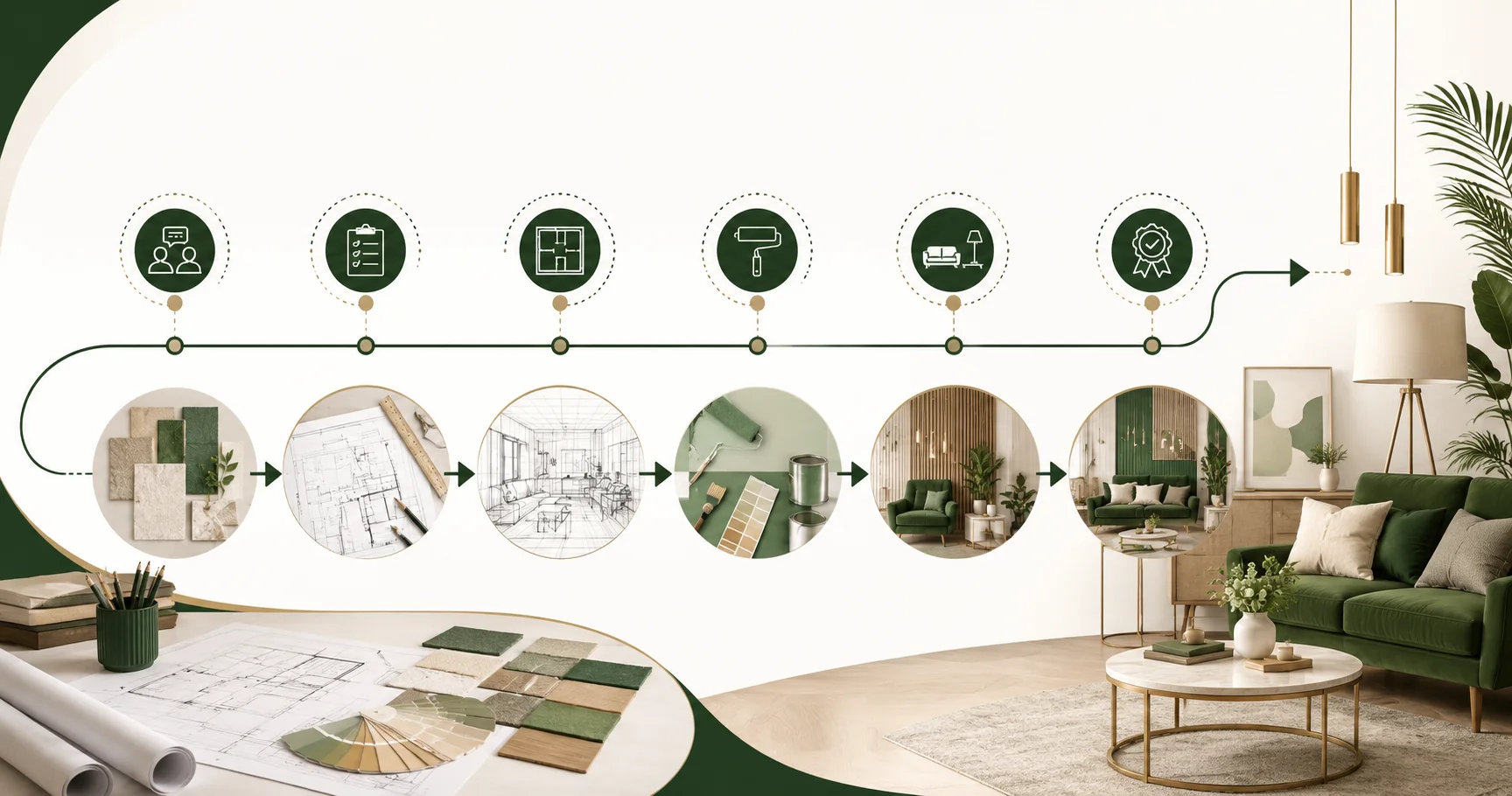
Are you redesigning your home? But there's one question almost everyone asks first: "How long is this actually going to take?"
Honestly, there's no single answer. It depends on your home size, how much customisation you want, and how fast decisions get made along the way. But here's the thing: if you're working with a good design team, the process usually follows a fairly clear path. Knowing what that path looks like helps you plan your move, set realistic expectations, and skip a lot of the stress that usually comes with renovations.
Steps for building an interior design project
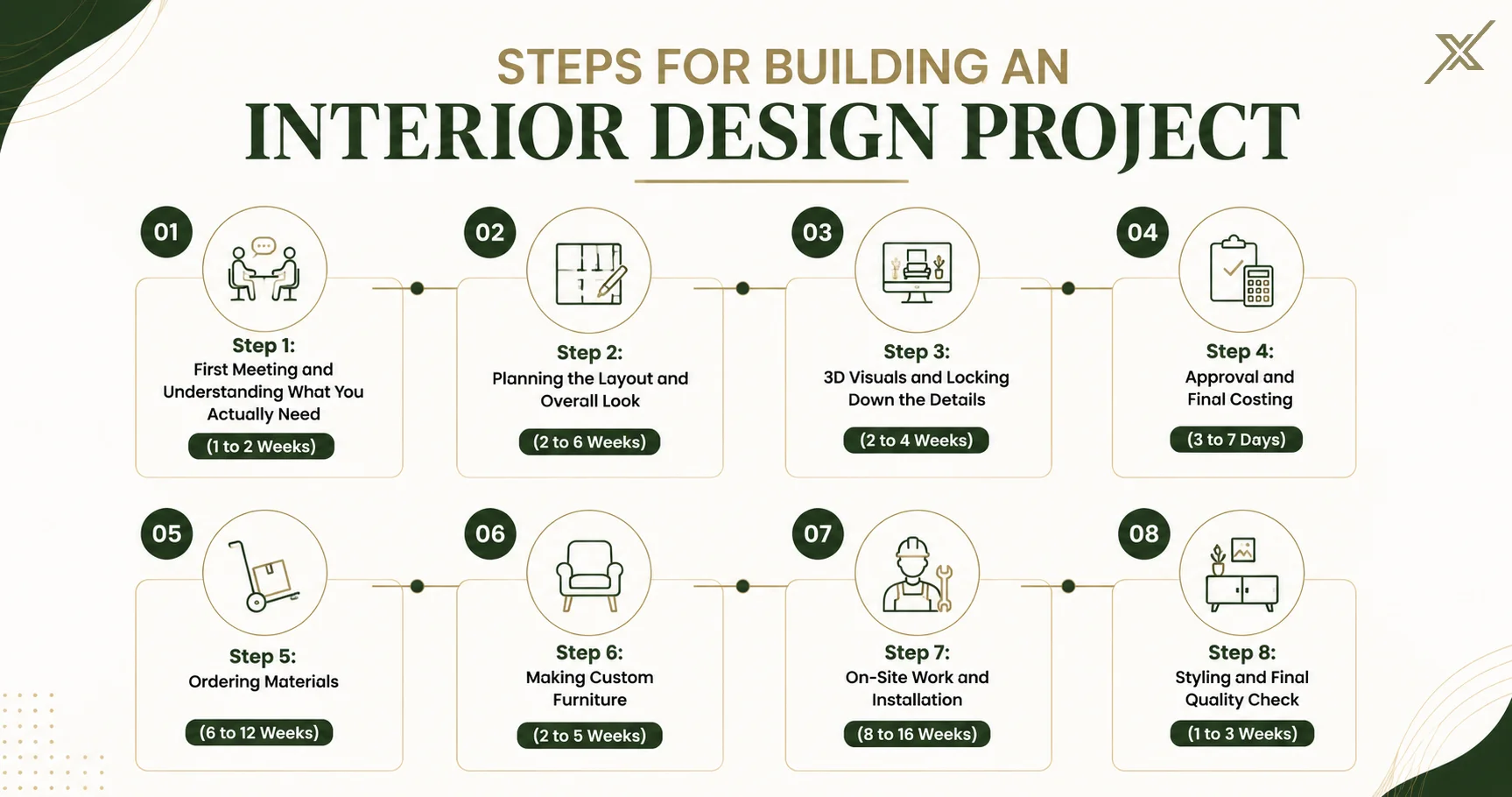
Step 1: First Meeting and Understanding What You Actually Need (1 to 2 Weeks)
Every project starts here, with a conversation. Your designer sits down with you to understand how you live day to day, what style you're drawn to, and what your budget looks like. They'll ask about your routine, your must-haves, and what each room really needs to do for you.
They'll also visit your home to take measurements and get a proper feel for the space, the natural light, the layout, all of it. This step might sound simple, but it matters more than people realise. Getting it right early saves a ton of back-and-forth down the line. Most of this takes one to two weeks, maybe a little more if a few family members' opinions need to align.
Step 2: Planning the Layout and Overall Look (2 to 6 Weeks)
Once your designer knows what you're after, the fun part begins. This is when you start seeing mood boards, colour options, and rough layouts for where your furniture will go.
This stage is really about figuring out what goes where, and what feeling you want your home to have. Minimal and modern? Warm and traditional? A bit of both? This is where that direction starts taking shape. Depending on your home size, this usually takes two to six weeks.
Step 3: 3D Visuals and Locking Down the Details (2 to 4 Weeks)
This is where things start feeling real. Your designer puts together 3D visuals so you can actually see your living room, kitchen, or bedroom before a single nail goes in. It's genuinely useful, you get to spot things you'd like to tweak, maybe a different shade, a bigger wardrobe, before it's too late to change easily.
Once you're happy with how everything looks, the team finalises materials, fittings, and detailed drawings, floor plans, electrical layouts, all the technical stuff that keeps the project running smoothly later. This usually takes two to four weeks.
Step 4: Approval and Final Costing (3 to 7 Days)
With the design locked in, your designer prepares the final quote, a clear breakdown of costs, materials, and the overall work schedule. This is your last real chance to go through everything before production kicks off.
Once you give the green light, there's usually a formal agreement to sign. This step moves quickly, just a few days, but it's an important checkpoint before things really get going.
Step 5: Ordering Materials (6 to 12 Weeks)
Now the real work starts, mostly behind the scenes. Your designer begins ordering everything your home needs, plywood, laminates, tiles, hardware, lighting, paints, the whole list.
This stage tends to take longer than people expect, and customisation is usually why. Ready-made pieces arrive quickly. But if you've chosen custom furniture or specific finishes, sourcing them just takes more time. On average, this stage runs six to twelve weeks, depending on how much of your home is customised.
Step 6: Making Custom Furniture (2 to 5 Weeks)
While materials are on their way, custom pieces like modular kitchens, wardrobes, and TV units are usually built in a factory rather than on-site. This means better quality control, and honestly, a lot less mess and noise in your home.
This step usually takes two to five weeks, and it often runs alongside material ordering to save time overall.
Step 7: On-Site Work and Installation (8 to 16 Weeks)
This is where your home really starts to transform. Carpentry begins, kitchens get installed, false ceilings go up, and electrical and plumbing work happens. If your project spans multiple rooms or has a lot of customisation, this stage naturally takes longer, there's just a lot going on at once.
For most full-home projects, this takes eight to sixteen weeks. Smaller updates, like fresh paint or new lighting, move much faster. Bigger renovations with heavy carpentry can stretch beyond sixteen weeks. Good coordination between the different workers on-site really helps keep this stage moving without hiccups.
Step 8: Styling and Final Quality Check (1 to 3 Weeks)
You're almost there. Once the main work wraps up, it's time for the finishing touches: furniture placement, lighting, artwork, curtains, and all the little details that actually make a house feel like home.
Your designer will also do a thorough walkthrough at this stage, catching anything that needs fixing before handover. This usually takes one to three weeks, depending on how much styling and fine-tuning is involved.
How Long Does the Whole Thing Actually Take?
Roughly speaking, here's what most people can expect:
2 BHK homes: About 6 to 10 weeks
3 BHK homes: About 8 to 14 weeks
Larger homes or villas: About 10 to 20 weeks, sometimes longer for heavily customised projects
Keep in mind, these are averages, not guarantees. Your actual timeline depends on your home's size, how much you're customising, and how quickly decisions get made along the way.
What Slows Things Down?
A few things tend to cause delays, again and again:
Changing your mind after the design's already approved
Taking too long to pick materials or finishes
Heavy custom carpentry work
Poor coordination between different workers on-site
Structural changes that weren't part of the original plan
How to Keep Your Project on Track
If you want things to move smoothly, here's what actually helps:
Finalise your design early, and try to avoid last-minute changes
Approve materials and quotes as quickly as you can
Keep communication open and honest with your design team
Choose an experienced designer who's good at managing timelines
Give yourself a small buffer around your move-in date, just in case
Starting early always makes things easier, especially if your flat handover date is already fixed and you don't have much wiggle room.
Conclusion
An interior design project doesn't happen overnight. Every step, from your first conversation with the designer to the final styling touches, plays a real part in getting your home right. Most homes take anywhere from two to five months from start to finish, depending on size and customization. If you're currently searching for interior designers in Bangalore, it helps to work with a team that understands local layouts, material availability, and typical building constraints, since that local knowledge often decides how smoothly your project runs. Choosing the right interior design services in Bangalore means realistic timelines, clear communication, and a home that's genuinely worth the wait.
Are you redesigning your home? But there's one question almost everyone asks first: "How long is this actually going to take?"
Honestly, there's no single answer. It depends on your home size, how much customisation you want, and how fast decisions get made along the way. But here's the thing: if you're working with a good design team, the process usually follows a fairly clear path. Knowing what that path looks like helps you plan your move, set realistic expectations, and skip a lot of the stress that usually comes with renovations.
Steps for building an interior design project
Step 1: First Meeting and Understanding What You Actually Need (1 to 2 Weeks)
Every project starts here, with a conversation. Your designer sits down with you to understand how you live day to day, what style you're drawn to, and what your budget looks like. They'll ask about your routine, your must-haves, and what each room really needs to do for you.
They'll also visit your home to take measurements and get a proper feel for the space, the natural light, the layout, all of it. This step might sound simple, but it matters more than people realise. Getting it right early saves a ton of back-and-forth down the line. Most of this takes one to two weeks, maybe a little more if a few family members' opinions need to align.
Step 2: Planning the Layout and Overall Look (2 to 6 Weeks)
Once your designer knows what you're after, the fun part begins. This is when you start seeing mood boards, colour options, and rough layouts for where your furniture will go.
This stage is really about figuring out what goes where, and what feeling you want your home to have. Minimal and modern? Warm and traditional? A bit of both? This is where that direction starts taking shape. Depending on your home size, this usually takes two to six weeks.
Step 3: 3D Visuals and Locking Down the Details (2 to 4 Weeks)
This is where things start feeling real. Your designer puts together 3D visuals so you can actually see your living room, kitchen, or bedroom before a single nail goes in. It's genuinely useful, you get to spot things you'd like to tweak, maybe a different shade, a bigger wardrobe, before it's too late to change easily.
Once you're happy with how everything looks, the team finalises materials, fittings, and detailed drawings, floor plans, electrical layouts, all the technical stuff that keeps the project running smoothly later. This usually takes two to four weeks.
Step 4: Approval and Final Costing (3 to 7 Days)
With the design locked in, your designer prepares the final quote, a clear breakdown of costs, materials, and the overall work schedule. This is your last real chance to go through everything before production kicks off.
Once you give the green light, there's usually a formal agreement to sign. This step moves quickly, just a few days, but it's an important checkpoint before things really get going.
Step 5: Ordering Materials (6 to 12 Weeks)
Now the real work starts, mostly behind the scenes. Your designer begins ordering everything your home needs, plywood, laminates, tiles, hardware, lighting, paints, the whole list.
This stage tends to take longer than people expect, and customisation is usually why. Ready-made pieces arrive quickly. But if you've chosen custom furniture or specific finishes, sourcing them just takes more time. On average, this stage runs six to twelve weeks, depending on how much of your home is customised.
Step 6: Making Custom Furniture (2 to 5 Weeks)
While materials are on their way, custom pieces like modular kitchens, wardrobes, and TV units are usually built in a factory rather than on-site. This means better quality control, and honestly, a lot less mess and noise in your home.
This step usually takes two to five weeks, and it often runs alongside material ordering to save time overall.
Step 7: On-Site Work and Installation (8 to 16 Weeks)
This is where your home really starts to transform. Carpentry begins, kitchens get installed, false ceilings go up, and electrical and plumbing work happens. If your project spans multiple rooms or has a lot of customisation, this stage naturally takes longer, there's just a lot going on at once.
For most full-home projects, this takes eight to sixteen weeks. Smaller updates, like fresh paint or new lighting, move much faster. Bigger renovations with heavy carpentry can stretch beyond sixteen weeks. Good coordination between the different workers on-site really helps keep this stage moving without hiccups.
Step 8: Styling and Final Quality Check (1 to 3 Weeks)
You're almost there. Once the main work wraps up, it's time for the finishing touches: furniture placement, lighting, artwork, curtains, and all the little details that actually make a house feel like home.
Your designer will also do a thorough walkthrough at this stage, catching anything that needs fixing before handover. This usually takes one to three weeks, depending on how much styling and fine-tuning is involved.
How Long Does the Whole Thing Actually Take?
Roughly speaking, here's what most people can expect:
2 BHK homes: About 6 to 10 weeks
3 BHK homes: About 8 to 14 weeks
Larger homes or villas: About 10 to 20 weeks, sometimes longer for heavily customised projects
Keep in mind, these are averages, not guarantees. Your actual timeline depends on your home's size, how much you're customising, and how quickly decisions get made along the way.
What Slows Things Down?
A few things tend to cause delays, again and again:
Changing your mind after the design's already approved
Taking too long to pick materials or finishes
Heavy custom carpentry work
Poor coordination between different workers on-site
Structural changes that weren't part of the original plan
How to Keep Your Project on Track
If you want things to move smoothly, here's what actually helps:
Finalise your design early, and try to avoid last-minute changes
Approve materials and quotes as quickly as you can
Keep communication open and honest with your design team
Choose an experienced designer who's good at managing timelines
Give yourself a small buffer around your move-in date, just in case
Starting early always makes things easier, especially if your flat handover date is already fixed and you don't have much wiggle room.
Conclusion
An interior design project doesn't happen overnight. Every step, from your first conversation with the designer to the final styling touches, plays a real part in getting your home right. Most homes take anywhere from two to five months from start to finish, depending on size and customization. If you're currently searching for interior designers in Bangalore, it helps to work with a team that understands local layouts, material availability, and typical building constraints, since that local knowledge often decides how smoothly your project runs. Choosing the right interior design services in Bangalore means realistic timelines, clear communication, and a home that's genuinely worth the wait.
Let's
Build
something
enduring
Every exceptional space begins with a conversation. We'd be honored to learn about your vision.
Let's
Build
something
enduring
Every exceptional space begins with a conversation. We'd be honored to learn about your vision.
Let's
Build
something
enduring
Every exceptional space begins with a conversation. We'd be honored to learn about your vision.